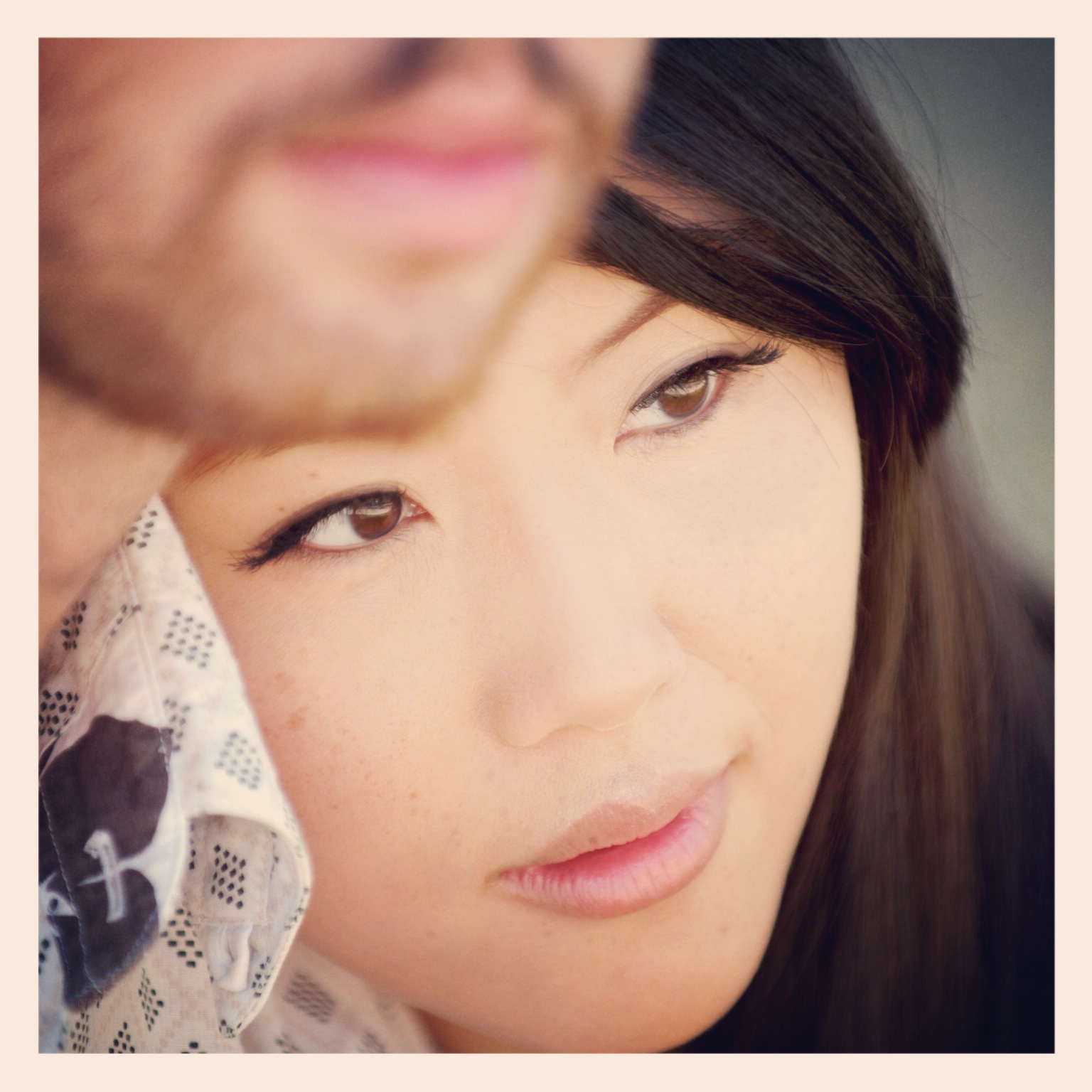
you can’t have it all, but there is this

you can't have it all, but there is this

I’m Lao but I was born in a Thai refugee camp. Here I am hanging out with my buddies and listening to our favourite cassettes. (Photo credit: nokxayasane/Instagram)

Happy Thanksgiving to all my lovely (Canadian) readers!

I know, I know, if you’re American, Thanksgiving’s not for another month or so. But that doesn’t mean you can’t celebrate with your neighbours from the North, right?

Mmmm, Thanksgiving. I wish I could share my homemade pumpkin pies with all of you. It may be the best pumpkin pie in existence. I’m not exaggerating. Or biased, whatsoever.

Pumpkin pies and baked goodies aren’t the only things I’m thankful for though. I’m thankful for a whole lot and when I sat down to think about my gratitude list, I felt almost overwhelmed but really happy.

It made me think: Many of the things we’re thankful for are shaped by where we come from and when we were born. I’m Lao but I was born in a Thai refugee camp. My parents and I immigrated to Canada when I was five years old. Sometimes it blows my mind to know I could’ve led a very different life.

But I also realized how similar we all are even with our diverse backgrounds and varying value systems. It’s a wonderful feeling to sit across from someone who seems so different from me — only to learn we both have a soft spot for Boyz II Men and would prefer to spend our Friday evenings cuddling with our tabby cats.

It’s also a wonderful thing to be able to connect with people I’ve never met and may never meet. Today marks two years since I began Bird of Passage! I’m thankful for this sense of community and for having a platform to share my love of poetry and music.

With that being said, I hope you enjoy this poem by Barbara Ras which sheds light on all the little and big things we may forget to be thankful for. Happy Thanksgiving, friends!

You Can’t Have It All, Barbara Ras

But you can have the fig tree and its fat leaves like clown hands
gloved with green. You can have the touch of a single eleven-
   year-old finger
on your cheek, waking you at one a.m. to say the hamster is back.
You can have the purr of the cat and the soulful look
of the black dog, the look that says, If I could I would bite
every sorrow until it fled, and when it is August,
you can have it August and abundantly so. You can have love,
though often it will be mysterious, like the white foam
that bubbles up at the top of the bean pot over the red kidneys
until you realize foam’s twin is blood.
You can have the skin at the center between a man’s legs,
so solid, so doll-like. You can have the life of the mind,
glowing occasionally in priestly vestments, never admitting
   pettiness,
never stooping to bribe the sullen guard who’ll tell you
all roads narrow at the border.
You can speak a foreign language, sometimes,
and it can mean something. You can visit the marker on the
   grave
where your father wept openly. You can’t bring back the dead,
but you can have the words forgive and forget hold hands
as if they meant to spend a lifetime together. And you can be
   grateful
for makeup, the way it kisses your face, half spice, half amnesia,
   grateful
for Mozart, his many notes racing one another towards joy,
   for towels
sucking up the drops on your clean skin, and for deeper thirsts,
for passion fruit, for saliva. You can have the dream,
the dream of Egypt, the horses of Egypt and you riding in the
   hot sand.
You can have your grandfather sitting on the side of your bed,
at least for a while, you can have clouds and letters, the leaping
of distances, and Indian food with yellow sauce like sunrise.
You can't count on grace to pick you out of a crowd
but here is your friend to teach you how to high jump,
how to throw yourself over the bar, backwards,
until you learn about love, about sweet surrender,
and here are periwinkles, buses that kneel, farms in the mind
as real as Africa. And when adulthood fails you,
you can still summon the memory of the black swan on the pond
of your childhood, the rye bread with peanut butter and bananas
your grandmother gave you while the rest of the family slept.
There is the voice you can still summon at will, like your mother’s,
it will always whisper, you can’t have it all,
but there is this.

Ras, Barbara. “You Can’t Have It All.” She Walks in Beauty. Ed. Caroline Kennedy. New York: Hyperion, 2011.

the idea that she was possible

dance floors would bleed from the knife of her dress (Photo credit: @nokxayasane/Instagram)

dance floors would bleed from the knife of her dress (Photo credit: nokxayasane/Instagram)

When you start a new chapter in your life, you can get super stressed out.

Whether you’ve decided to move to a new city, take on a new job, or end a toxic relationship, there’s always a sense of fear that comes with your decision.

But fear shouldn’t be something we … well … fear. It’s the thrill of knowing our life, as we know it, is about to change, drastically.

Yes, there will be times when we’re lost on the metro and have no clue where we’re going and we ask ourselves why we’ve moved to a city of faceless strangers. Yes, there will be days when our new boss is micromanaging the sanity out of us and we’re dying for the clock to read 5 pm. And yes, there will be days when we wish for the comfort of our former partner even though the relationship was as dysfunctional as Hannah and Adam’s relationship in the first season of Girls.

For me, whenever I start a new chapter in my life, I try and find poetry that comforts me and validates my decisions.

This is an excerpt I took from Dionne Brand’s book of poetry called Thirsty. I chose the parts I liked best so it’s missing a bunch of the poem.

To read the whole poem, check out her book. Do people still buy books nowadays? I hope so. Books are the bees’ knees.

XXXI, Dionne Brand

the clarity
of the traffic, the sky, the day, her life
her directions, plain, unknown, except for this,
the idea, the idea that she was possible

she could assassinate streets with her eyes
damage books and chemical compounds and honey and waiting
rooms, dance floors would bleed from the knife of her dress

She needed to smell, without dying, the skin
of someone else, she needed without wounding,
without a murder, without a killing, a truce if not peace,
a city, as a city was supposed to be, forgetful,
and to gather up any charm she might have
left, to sleep, to feel snow, to have it matter,
to wake the leaves, to hate rain

Heads up!

I’m starting a new lifestyle blog in the new year which chronicles my adventures as a freelance writer trying to make it in the big city (Toronto) with the help of food, friends, and feline. Stay tuned!

for work that is real

We all know working isn’t the greatest. When you’re paid to do something, it makes the job less magical.

On the other hand, there’s nothing more attractive than being around hardworking people. It’s like I kinda hope their passion and work ethic will rub off on me. They inspire me to stop watching reruns of The Hills, get off the couch and get working.

I’m trying a new thing now. Or I’m trying to try a new thing. I’m looking to do work I’m truly passionate about.

There are all kinds of reasons to pursue a specific career and many of them are obvious and can’t be ignored (examples: paying rent to keep from being homeless, buying groceries to keep from starving), but when all that’s taken care of, you’re left with the “why.” Why am I working so hard at a job I’m not passionate about?

It’s a question we should ask ourselves before our mid-life crisis rolls around.

To be of use, Marge Piercy

The people I love the best
jump into work head first
without dallying in the shallows
and swim off with sure strokes almost out of sight.
They seem to become natives of that element,
the black sleek heads of seals
bouncing like half-submerged balls.

I love people who harness themselves, an ox to a heavy cart,
who pull like water buffalo, with massive patience,
who strain in the mud and the muck to move things forward,
who do what has to be done, again and again.

I want to be with people who submerge
in the task, who go into the fields to harvest
and work in a row and pass the bags along,
who are not parlor generals and field deserters
but move in a common rhythm
when the food must come in or the fire be put out.

The work of the world is common as mud.
Botched, it smears the hands, crumbles to dust.
But the thing worth doing well done
has a shape that satisfies, clean and evident.
Greek amphoras for wine or oil,
Hopi vases that held corn, are put in museums
but you know they were made to be used.
The pitcher cries for water to carry
and a person for work that is real.

I love you. I’m glad I exist.

Sometimes we forget to appreciate the ordinary, everyday things. This poem reminds us to take a moment, look around, and realize how lucky we really are. It’s so simple. So good.

The Orange, Wendy Cope

At lunchtime I bought a huge orange—
The size of it made us all laugh.
I peeled it and shared it with Robert and Dave—
They got quarters and I had a half.

And that orange, it made me so happy,
As ordinary things often do
Just lately. The shopping. A walk in the park.
This is peace and contentment. It’s new.

The rest of the day was quite easy.
I did all the jobs on my list
And enjoyed them and had some time over.
I love you. I’m glad I exist.

that in me sings no more

Sonnet XLIII, Edna St. Vincent Millay

What lips my lips have kissed, and where, and why,
I have forgotten, and what arms have lain
Under my head till morning, but the rain
Is full of ghosts tonight, that tap and sigh
Upon the glass and listen for reply,
And in my heart there stirs a quiet pain
For unremembered lads that not again
Will turn to me at midnight with a cry.
Thus in the winter stands the lonely tree,
Nor knows what birds have vanished one by one,
Yet knows its boughs more silent than before:
I cannot say what loves have come and gone,
I only know that summer sang in me
A little while, that in me sings no more.

Good Poems, Selected and Introduced by Garrison Keillor (2002)

For the one I love most lay sleeping by me

When I Heard at the Close of Day, Walt Whitman

When I heard at the close of the day how my name had been
    receiv'd with plaudits in the capitol, still it was not a happy
    night for me that follow'd,
And else, when I carous'd, or when my plans were accomplish'd,
    still I was not happy,
But the day when I rose at dawn from the bed of perfect health,
    refresh'd, singing, inhaling the ripe breath of autumn,
When I saw the full moon in the west grow pale and disappear in
    the morning light,
When I wander'd alone over the beach, and undressing bathed,
    laughing with the cool waters, and saw the sun rise,
And when I thought my dear friend my lover was on his way
    coming. O then I was happy,
O then each breath tasted sweeter, and all that day my food
    nourish'd me more, and the beautiful day pass'd well,
And the next came with equal joy, and with the next at evening
    came my friend,
And that night while all was still I heard the waters roll slowly
    continually up the shores,
I heard the hissing rustle of the liquid and sands as directed to me
    whispering to congratulate me,
For the one I love most lay sleeping by me under the same cover in
    the cool night,
In stillness in the autumn moonbeams his face was inclined
    toward me,
And his arm lay lightly around my breast—and that night I was
    happy

Good Poems, Selected and Introduced by Garrison Keillor (2002)

to declare the pain of our deliverance

Golden hour in Southampton, Ontario (Photo credit: nokyoungxayasane / Instagram)

Golden hour in Southampton, Ontario (Photo credit: nokxayasane/Instagram)

Liberation, Abena Busia

We are all mothers
and we have that fire within us,
of powerful women
whose spirits are so angry
we can laugh beauty into life
and still make you taste
the salt tears of our knowledge—
For we are not tortured
anymore:
we have seen beyond your lies and disguises,
and we have mastered the language of words,
we have mastered speech
And know
we have also seen ourselves
We have stripped ourselves raw
and naked piece by piece until our flesh lies flayed
with blood on our own hands
What terrible thing can you do to us
which we have not done to ourselves?
What can you tell us
which we didn’t deceive ourselves with
a long time ago?
You cannot know how long we cried
until we laughed
over the broken pieces of our dreams.
Ignorance
shattered us into such fragments
we had to unearth ourselves piece by piece,
to recover with our own hands such unexpected relics
even we wondered
how we could hold such treasure.
Yes, we have conceived
to forge our mutilated hopes
into the substance of visions
beyond your imaginings
to declare the pain of our deliverance
So do not even ask,
do not ask what is we are labouring with this time.
Dreamers remember their dreams
when we are disturbed—
And you shall not escape
what we will make
of the broken pieces of our lives.

(Ghana)

The Poetry of Our World: An International Anthology of Contemporary Poetry (2000)

no your body is no prison

Padmapani, Breyten Breytenbach

Padmapani
No your body is no prison
your understanding has petals
sweeter than moonlight
your hair is a secret
black wave
a banner against the light
two butterflies have settled
on the twigs above your nose
if only to upset my pen
and each ear is a beach
against the wash of tides
your eyes are two shelters in the desert
two tents with brilliant peacocks
and my eyelashes lament on your shoulders
your back is a glistening lance in water
and soon after dusk your small dunes
rose from my palms
your heart moves with the quick
soundlessness of chewing peanuts
your hands are tom thumb
and all his brownish friends
where your thighs meet your belly
struts a small proud plume
o hail to the jewel in the lotus
how sweet it must be
to dive upwards
into that nothingness
no your body is no prison
Padmapani

(translated by André Brink)

(South Africa)

The Poetry of Our World: An International Anthology of Contemporary Poetry (2000)

I Love You More Than All the Windows in New York City

Photo credit: @nokyoungxayasane / Instagram

Photo credit: Original by Taylor Jackson Photography; Edited by nokxayasane/Instagram

I Love You More Than All the Windows in New York City
Jessica Greenbaum

The day turned into the city
and the city turned into the mind
and the moving trucks trumbled along
like loud worries speaking over
the bicycle’s idea
which wove between
the more armored vehicles of expression
and over planks left by the construction workers
on a holiday morning when no work was being done
because no matter the day, we tend towards
remaking parts of it—what we said
or did, or how we looked—
and the buildings were like faces
lining the banks of a parade
obstructing and highlighting each other
defining height and width for each other
offsetting grace and function
like Audrey Hepburn from
Jesse Owens, and the hearty pigeons collaborate
with wrought iron fences
and become recurring choruses of memory
reassembling around benches
we sat in once, while seagulls wheel
like immigrating thoughts, and never-leaving
chickadees hop bared hedges and low trees
like commas and semicolons, landing
where needed, separating
subjects from adjectives, stringing along
the long ideas, showing how the cage
has no door, and the lights changed
so the tide of sound ebbed and returned
like our own breath
and when I knew everything
was going to look the same as the mind
I stopped at a lively corner
where the signs themselves were like
perpendicular dialects in conversation and
I put both my feet on the ground
took the bag from the basket
so pleased it had not been crushed
by the mightiness of all else
that goes on and gave you the sentence inside.

Read more about this poem and poet on the Poetry Foundation website: http://bit.ly/T5U2sC.

Tell me about despair, yours, and I will tell you mine

the world offers itself to your imagination (Photo credit: @nokyoungxayasane / Instagram)

the world offers itself to your imagination (Photo credit: @nokxayasane/Instagram)

Wild Geese, Mary Oliver

You do not have to be good.
You do not have to walk on your knees
for a hundred miles through the desert repenting.
You only have to let the soft animal of your body
love what it loves.

Tell me about despair, yours, and I will tell you mine.
Meanwhile the world goes on.
Meanwhile the sun and the clear pebbles of the rain
are moving across the landscapes,
over the prairies and the deep trees,
the mountains and the rivers.
Meanwhile the wild geese, high in the clean blue air,
are heading home again.

Whoever you are, no matter how lonely,
the world offers itself to your imagination,
calls to you like the wild geese, harsh and exciting —
over and over announcing your place
in the family of things.