For this reason the sadness too passes
I read somewhere that people who have gone through catastrophic events of war and famine, find that the greatest struggle of their lives lies far deeper, deeper than they can articulate. I know I’ve gone through many things: coming from a brutal climate of war, poverty, and violence. It almost seems like someone wrote up my life and said, Here you go—this is your test in strength and resiliency. I think a lot of people feel that way.
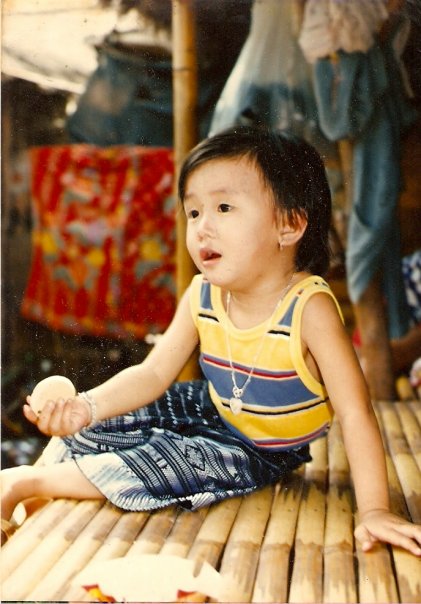
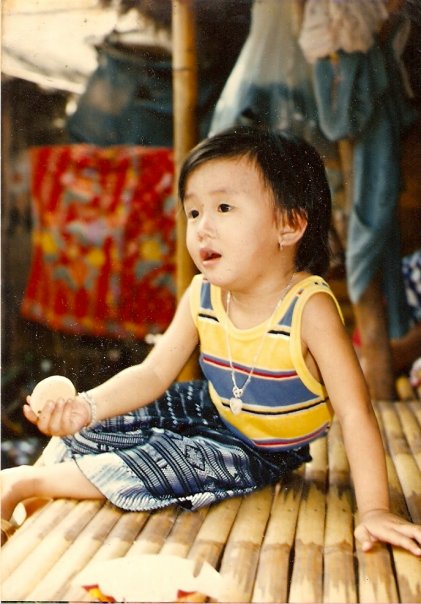
But the one thing I felt wholly unprepared for was plain, old heartache. After ending a nine-year relationship and breaking off an engagement, I felt utterly lost. I found myself drawn to the things that comforted me as a child, the same things that helped me when I was physically, emotionally, and sexually abused. I drew to writing. I drew to poetry and music. I looked at photos of myself as a child—just to try and make sense of where I had come from, to try and ground myself in something.
I’m not someone that likes to feel weak or to ask anyone for anything, especially help, so I tried to look for my own remedies. I found this book by Rainer Maria Rilke that served as my lifeline. Every page seemed to emanate with understanding and compassion. He seemed to speak to me, to speak right to me, and I felt so grateful to know that someone had felt the same things that I was feeling at the moment.
I would highly recommend this book. Except for a few key people who helped me through this time in my life, this book was one of the things that kept me going. Below is one of the passages that really helped me. I hope it helps you too.
Letters to a Young Poet, Rainer Maria Rilke
I believe that almost all our sadnesses are moments of tension that we find paralyzing because we no longer hear our surprised feelings living. Because we are alone with the alien thing that has entered into our self; because everything intimate and accustomed is for an instant taken away; because we stand in the middle of a transition where we cannot remain standing. For this reason the sadness too passes: the new thing in us, the added thing, has entered into our heart, has gone into its inmost chamber and is not even there anymore,–is already in our blood. And we do not learn what it was. We could easily be made to believe that nothing has happened, and yet we have changed, as a house changes into which a guest has entered. We cannot say who has come, perhaps we shall never know, but many signs indicate that the future enters into us in this way in order to transform itself in us long before it happens. And this is why it is so important to be lonely and attentive when one is sad: because the apparently uneventful and stark moment at which our future sets foot in us is so much closer to life than that other noisy and fortuitous point of time at which it happens to us as if from outside. The more still, more patient and more open we are when we are sad, so much the deeper and so much the more unswervingly does the new go into us, so much the better do we make it ours, so much the more will it be our destiny, and when on some later day it “happens” (that is, steps forth out of us to others), we shall feel in our inmost selves akin and near to it. And that is necessary. It is necessary–and toward this our development will move gradually–that nothing strange should befall us, but only that which has long belonged to us.


 Bird of Passage