I am not beautiful

I_am_not_beautiful

With you nothing is simple yet nothing is simpler
(Lines Depicting Simple Happiness, Peter Gizz)

I am not beautiful
Nokyoung Xayasane

When you told me
you were fucking her,
I felt nothing.

Not much has changed
since you left.
I still wake up in the morning
and make my coffee.
I still laugh with friends in cafes.
I still find beauty in the pink light
punching out from between
condos and high rises.
I flick the light switches
on and off
to watch the shadows
emerge and disappear.
On New Year’s Eve I kissed a girl,
and it was fine.
All weekend, I fucked a stranger.
I drank all night
and threw up in my wastebasket.
I feel nothing.
I feel everything.

Sometimes when the loneliness
presses hard
against my chest,
I lie my head on
my own splayed arm
and with my other arm,
I cradle myself.
When my head feels hot,
I lie my face against the vanity
to feel its coolness.
I hope it will
enter me
and I will be refreshed,
renewed,
someone different
from myself.

I stood on the corner
of Broadway and Yonge
and watched the snow
carefully descending,
pirouetting from the sky,
and the darkness
a backdrop
for a city living.

I felt alcohol and weed surge
through my blood as I made
my way to the subway
with condoms and fresh panties
in my pockets.
Semper paratus,
as they say.

I fuck strangers
and wake from the sleep of them.
I am weak, I know,
and vengeful. I am not beautiful.

(January 2016)

What we talk about when we talk about love

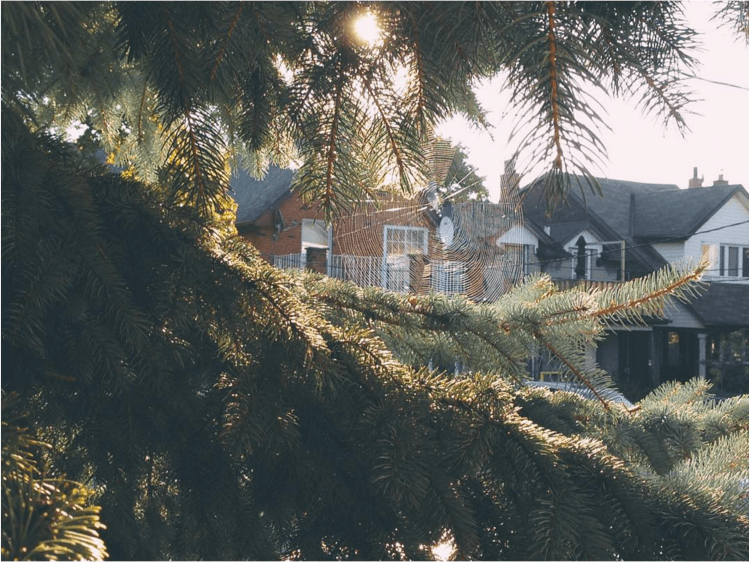
cobweb in the sunshine and the last Sunday I sat on this particular porch

cobweb in the sunshine and the last Sunday I sat on this particular porch

What we talk about when we talk about love
Nokyoung Xayasane

I think I miss laughter the most.
I miss laughter, induced by another person,
or should I be more specific?
Induced by you.
Sitting on our front porch,
there were those tinkering wind chimes
our neighbour hung that annoyed you
but charmed me.
Do you remember them?

We sat in the comfort of each other,
reading and not speaking
while the hushed streets barely
whispered in the summer wind.

I miss the ease with which you live
your life,
the lazy energy of Saturday morning,
when there was time to say nothing
and do very little.

Sometimes I would look over at you
and I would try and remember
the sunlight streaming through the evergreen tree
beside our porch,
and I could barely contain myself for joy.

I miss the lazy car rides where I didn’t
have to talk and you didn’t have to listen.
We shared a silence
that only two people can share
who have said all they have to say
and need not say one word more.

Yes, I do,
I do, miss the easy laughter,
and I miss those lazy summer nights
when we were young and free
and full of something we could not name.

This morning,
riding back to our old neighbourhood,
I realized I missed
the wide-eyed enchantment
of things to come,
not knowing what was next for us.
Do you miss those things too?
I wonder,
but am too afraid to ask.

The man beside me on the streetcar
murmurs something incoherent
and I miss the ease of not missing you.

I know I can return
but I can never go back
to that place we shared
where laughter came easy
and the days were sweet and pure
and full of possibilities.
Do you remember that place
as I remember it?

I guess missing is all we have.
Those memories we shared from long ago,
they become as audible
as our old neighbour’s wind chimes
and as bright as the light streaming
through the evergreen trees
where two people read in the hush of summer.

And I realize far too late,
this must be what we talk about
when we talk about love.

(November 2015)

why shouldn’t something I have always known be the very best there is

Peanut Butter by Eileen Myles

I am always hungry
& wanting to have
sex. This is a fact.
If you get right
down to it the new
unprocessed peanut
butter is no damn
good & you should
buy it in a jar as
always in the
largest supermarket
you know. And
I am an enemy
of change, as
you know. All
the things I
embrace as new
are in
fact old things,
re-released: swimming,
the sensation of
being dirty in
body and mind
summer as a
time to do
nothing and make
no money. Prayer
as a last re-
sort. Pleasure
as a means,
and then a
means again
with no ends
in sight. I am
absolutely in opposition
to all kinds of
goals. I have
no desire to know
where this, anything
is getting me.
When the water
boils I get
a cup of tea.
Accidentally I
read all the
works of Proust.
It was summer
I was there
so was he. I
write because
I would like
to be used for
years after
my death. Not
only my body
will be compost
but the thoughts
I left during
my life. During
my life I was
a woman with
hazel eyes. Out
the window
is a crooked
silo. Parts
of your
body I think
of as stripes
which I have
learned to
love along. We
swim naked
in ponds &
I write be-
hind your
back. My thoughts
about you are
not exactly
forbidden, but
exalted because
they are useless,
not intended
to get you
because I have
you & you love
me. It’s more
like a playground
where I play
with my reflection
of you until
you come back
and into the
real you I
get to sink
my teeth. With
you I know how
to relax. &
so I work
behind your
back. Which
is lovely.
Nature
is out of control
you tell me &
that’s what’s so
good about
it. I’m immoderately
in love with you,
knocked out by
all your new
white hair

why shouldn’t
something
I have always
known be the
very best there
is. I love
you from my
childhood,
starting back
there when
one day was
just like the
rest, random
growth and
breezes, constant
love, a sand-
wich in the
middle of
day,
a tiny step
in the vastly
conventional
path of
the Sun. I
squint. I
wink. I
take the
ride.

Eileen Myles, “Peanut Butter” from Not Me, published by Semiotext(e). Copyright © 1991 by Eileen Myles.

Read more about this poem and poet on www.poetryfoundation.org.

For the one I love most lay sleeping by me

When I Heard at the Close of Day, Walt Whitman

When I heard at the close of the day how my name had been
    receiv'd with plaudits in the capitol, still it was not a happy
    night for me that follow'd,
And else, when I carous'd, or when my plans were accomplish'd,
    still I was not happy,
But the day when I rose at dawn from the bed of perfect health,
    refresh'd, singing, inhaling the ripe breath of autumn,
When I saw the full moon in the west grow pale and disappear in
    the morning light,
When I wander'd alone over the beach, and undressing bathed,
    laughing with the cool waters, and saw the sun rise,
And when I thought my dear friend my lover was on his way
    coming. O then I was happy,
O then each breath tasted sweeter, and all that day my food
    nourish'd me more, and the beautiful day pass'd well,
And the next came with equal joy, and with the next at evening
    came my friend,
And that night while all was still I heard the waters roll slowly
    continually up the shores,
I heard the hissing rustle of the liquid and sands as directed to me
    whispering to congratulate me,
For the one I love most lay sleeping by me under the same cover in
    the cool night,
In stillness in the autumn moonbeams his face was inclined
    toward me,
And his arm lay lightly around my breast—and that night I was
    happy

Good Poems, Selected and Introduced by Garrison Keillor (2002)

I Love You More Than All the Windows in New York City

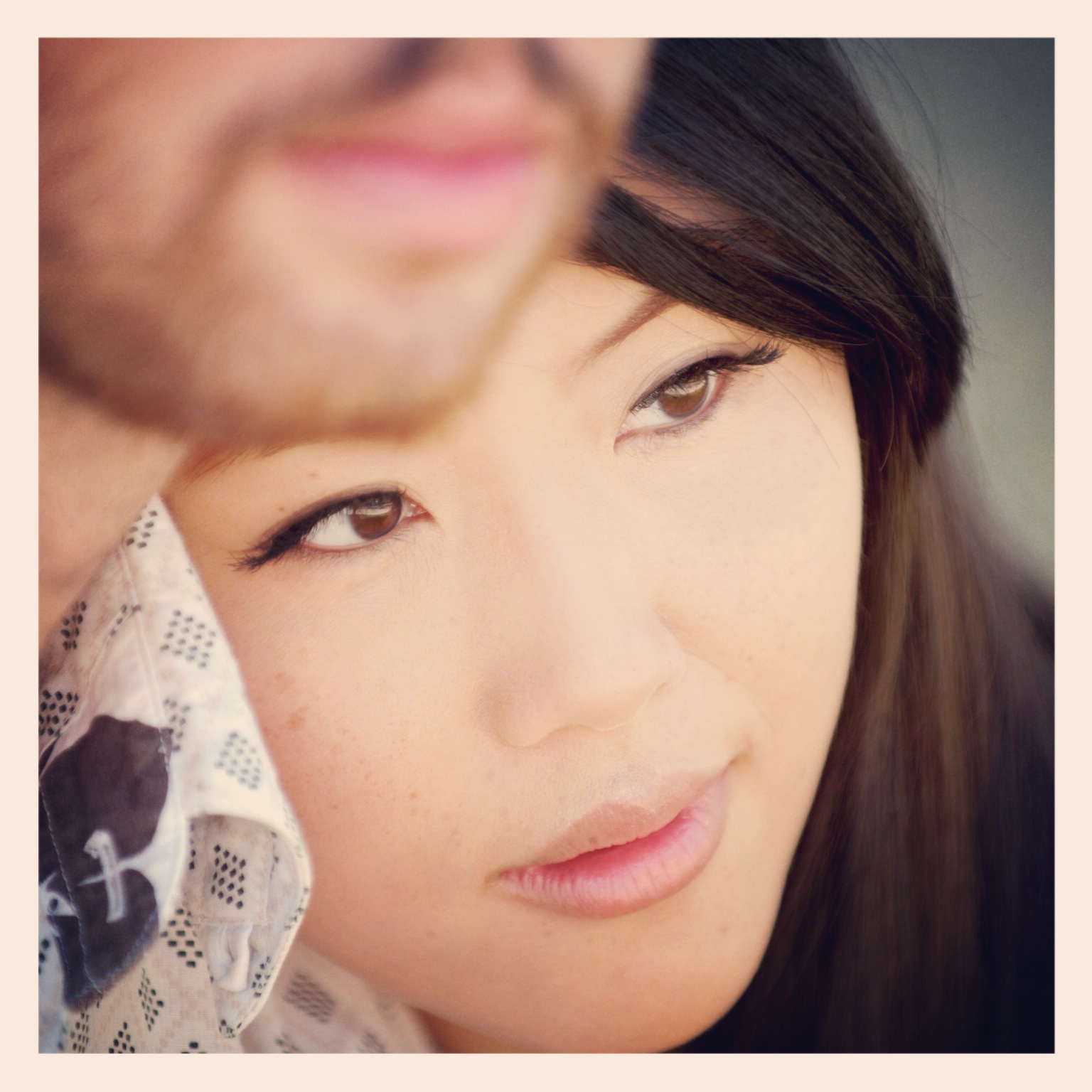
Photo credit: @nokyoungxayasane / Instagram

Photo credit: Original by Taylor Jackson Photography; Edited by nokxayasane/Instagram

I Love You More Than All the Windows in New York City
Jessica Greenbaum

The day turned into the city
and the city turned into the mind
and the moving trucks trumbled along
like loud worries speaking over
the bicycle’s idea
which wove between
the more armored vehicles of expression
and over planks left by the construction workers
on a holiday morning when no work was being done
because no matter the day, we tend towards
remaking parts of it—what we said
or did, or how we looked—
and the buildings were like faces
lining the banks of a parade
obstructing and highlighting each other
defining height and width for each other
offsetting grace and function
like Audrey Hepburn from
Jesse Owens, and the hearty pigeons collaborate
with wrought iron fences
and become recurring choruses of memory
reassembling around benches
we sat in once, while seagulls wheel
like immigrating thoughts, and never-leaving
chickadees hop bared hedges and low trees
like commas and semicolons, landing
where needed, separating
subjects from adjectives, stringing along
the long ideas, showing how the cage
has no door, and the lights changed
so the tide of sound ebbed and returned
like our own breath
and when I knew everything
was going to look the same as the mind
I stopped at a lively corner
where the signs themselves were like
perpendicular dialects in conversation and
I put both my feet on the ground
took the bag from the basket
so pleased it had not been crushed
by the mightiness of all else
that goes on and gave you the sentence inside.

Read more about this poem and poet on the Poetry Foundation website: http://bit.ly/T5U2sC.

with those we can no longer love

Falling by Nokyoung Xayasane

The golden leaves fell softly, gently oscillating in their descent. She sat there silently, looking out into the field from the tiny chapel window. Her breath quickened, and she wished that for one split second — everything would just stop. If only the present time could be hushed and imbued with reassuring stillness, but life wasn’t like that; it moves as if propelled towards something greater.

Sophia sat immobile. Her long white wedding dress enveloped her slight frame as she watched the leaves falling slowly to the ground; their golden descent matching her tears. Her arm moved upwards, struggling out of a dense mud, caked with lethargy. She wiped her tears away.

And then it happened — as it always did: She saw him, youthful and optimistic, under that tree, smiling at her quizzically, and she could almost touch him, as one who is able to touch the past. But he wasn’t there. He was somewhere that she could never reach. Even years later when she saw him at the theatre, he remained someone untouchable, unalterable. His hair had become sparser at the sides, but she could have recognized that energy anywhere; it calmed her and energized her simultaneously.

“Sophia, my God, it’s been so long. How are you?” He had asked her that numerous times in the past and it had always thrown her off guard, as if she were realizing for the first time that she existed and felt things as person.

“I’m well. How have you been, Owen?” The distance between them minimized. They stood there alone, except for the flakes that began to descend. Their intimacy — short in distance, but heavy with things left unsaid. She smiled; the light never reaching her eyes. He smiled back at her genuinely, but always curiously. In that one shared look she felt the impossibility of them sharing any space together for more than a few minutes, and the conversation meandered, never settling in one place, never standing still, and eventually they moved away from each other as their words lost any semblance of meaning. The distance between them expanded, and the crowd of people materialized around them.

“Well, it was nice to see you again.” As he said this he moved his hand to touch her shoulder, reminding her of the ever-present awkwardness between them. Two people who were too joined in mental space to exist properly in physical space.

“Yes, it was nice. I hope you continue… to be well.”

“You too.”

“Well, see you when I see you.”

“Who knows, maybe it’ll be less than five years before we run into each other again,” he joked, his eyes smiling.

“Yeah,” Sophia laughed softly. She wanted to reach out and touch him gently. She wanted to strangle him.

“Well, only time will tell,” he trailed off, lost somewhere. “Okay, bye then,” abruptly spoken.

“Bye.”

They moved away from each other into their own realities, but those moments stood still for her. She looked at herself in the mirror. Her face flushed, pulsating. She stood up and the train of white material rustled after her. The cool flow of air entered the room as she quickly opened the chapel window. Autumn air rushed in and the sound of the leaves rustled in tune with her dress as she fanned herself with her now feverish hands.

“This is not how I imagined it would happen.” Her youthful voice came to her from somewhere far off.

“What did you think was going to happen?” They were at the tree again. A light mist of rain fell, barely perceptible under the canopy. Sophia sat next to him with her legs folded into her body; her arms encircling herself, clutching at an unattainable comfort. He stretched his legs outward, looking at her with unbearable rationality. “That we could just get up and go?”

“If you asked me to go, I’d go.” Her intensity surprised even herself. She didn’t really want to go anywhere with him; she just wanted to sit still with him, to be with him, but this plan made things seem less real: running away together to somewhere far off instead of being here, in this space.

“Sophia, you’d hate me. The farther I took you away from Jacob, from your family, the more you’d regret it. By the time we reached the 401 you’d wished you had never decided to go.” Owen looked at her and she felt as if she were falling from a precipice, from somewhere she had been standing without realizing it. “You don’t even know me. We don’t even know each other,” he reasoned.

“But I want to know you.” Her naivety rang sharply in her ears. If only he would see it her way. If only he could.

“I’m someone that you’ve created in your mind. I’m not this person that you think I am,” he countered.

A deep sigh escaped from her lips. “I wish you existed.”

“I wish you existed.”

“Who?” asked her mother.

“Mom, what are you doing in here?”

“Well, honey, we’re waiting for you. Everyone’s waiting for you. Jacob’s waiting for you.”

“Okay Mom, I just need one more minute.”

“Is everything okay, Sophia?”

“Yeah, of course. I just need more time.” Only time will tell, Owen had said.

“Okay, sweetheart. I’ll be waiting for you outside.” Her mother softly closed the door behind her and Sophia was back at the tree.

“What if we came back to this spot in five years?” She looked at Owen helplessly.

“No, Sophia, I can’t do that. I won’t do that. If you leave Jacob it has to be because of what he’s done or what he isn’t. It can’t be for me. It has to be for you.”

“Sophia, it’s all been for you,” argued Jacob as they faced each other in the kitchen, a year before their wedding day.

“What has?”

“What do you mean? Everything has been for you: the ring, the house, everything!”

She wished she could feel something more. A part of her yearned to stay with him, but she was already gone. Her mind wandered past sandy terrains, past the cloak that had shielded her for all these years. I know you want to keep me here, but I cannot stay.

“Why do you want to be with me?”

“Because I’m only happy when you’re around. I need you.”

She could feel the cloak begin to tighten. A warm pain festered within her chest and she struggled to breathe. He held her then and the pain subsided, placated by his touch. His mouth moved above her, inside her, around her, and she fell into him. The ceramic tiles were cold against her back. He moved above her, looking down at her. He loves me, she thought, and her tears fell.

The autumn wind blew in through the chapel window. The leaves called out to her, called out for her to run. She clamoured up the windowsill and fell the short distance to the ground. The leaves crunched beneath her feet. Her heels pounded against the grass. More leaves fell around her — falling past her.  She ran, ran, ran. Never stopping.

A soft knock sounded at the door. “Are you ready? The music is about to start.” Sophia looked away from the window.

“Yes Mom, I’m coming.” For one moment, she stood still. She could feel the hard jut of the baseboard, the stickiness of skin on tile, the gasping breaths between two warm bodies.

She could feel the snow falling, melting on her face, the way snow surprises you with its first touch. And the rain. The drops of rain that made their way through the overhanging canopy; the drops that had fallen lightly between two youthful figures.

I wish you existed. Words reverberating from a past that moved forward without heed. I wish you didn’t need me so much.

Once the leaves outside were green, but they had changed to a golden hue, something altogether different, she thought. They perched on the tips of branches but eventually they must fall, softly floating down in their fragility to meet with the hard ground. She moved away from the window and the falling leaves.

The door opened and artificial light entered the room. She turned to face the light. Her mother’s face fell.