For the one I love most lay sleeping by me

When I Heard at the Close of Day, Walt Whitman

When I heard at the close of the day how my name had been
    receiv'd with plaudits in the capitol, still it was not a happy
    night for me that follow'd,
And else, when I carous'd, or when my plans were accomplish'd,
    still I was not happy,
But the day when I rose at dawn from the bed of perfect health,
    refresh'd, singing, inhaling the ripe breath of autumn,
When I saw the full moon in the west grow pale and disappear in
    the morning light,
When I wander'd alone over the beach, and undressing bathed,
    laughing with the cool waters, and saw the sun rise,
And when I thought my dear friend my lover was on his way
    coming. O then I was happy,
O then each breath tasted sweeter, and all that day my food
    nourish'd me more, and the beautiful day pass'd well,
And the next came with equal joy, and with the next at evening
    came my friend,
And that night while all was still I heard the waters roll slowly
    continually up the shores,
I heard the hissing rustle of the liquid and sands as directed to me
    whispering to congratulate me,
For the one I love most lay sleeping by me under the same cover in
    the cool night,
In stillness in the autumn moonbeams his face was inclined
    toward me,
And his arm lay lightly around my breast—and that night I was
    happy

Good Poems, Selected and Introduced by Garrison Keillor (2002)

to declare the pain of our deliverance

Golden hour in Southampton, Ontario (Photo credit: nokyoungxayasane / Instagram)

Golden hour in Southampton, Ontario (Photo credit: nokxayasane/Instagram)

Liberation, Abena Busia

We are all mothers
and we have that fire within us,
of powerful women
whose spirits are so angry
we can laugh beauty into life
and still make you taste
the salt tears of our knowledge—
For we are not tortured
anymore:
we have seen beyond your lies and disguises,
and we have mastered the language of words,
we have mastered speech
And know
we have also seen ourselves
We have stripped ourselves raw
and naked piece by piece until our flesh lies flayed
with blood on our own hands
What terrible thing can you do to us
which we have not done to ourselves?
What can you tell us
which we didn’t deceive ourselves with
a long time ago?
You cannot know how long we cried
until we laughed
over the broken pieces of our dreams.
Ignorance
shattered us into such fragments
we had to unearth ourselves piece by piece,
to recover with our own hands such unexpected relics
even we wondered
how we could hold such treasure.
Yes, we have conceived
to forge our mutilated hopes
into the substance of visions
beyond your imaginings
to declare the pain of our deliverance
So do not even ask,
do not ask what is we are labouring with this time.
Dreamers remember their dreams
when we are disturbed—
And you shall not escape
what we will make
of the broken pieces of our lives.

(Ghana)

The Poetry of Our World: An International Anthology of Contemporary Poetry (2000)

no your body is no prison

Padmapani, Breyten Breytenbach

Padmapani
No your body is no prison
your understanding has petals
sweeter than moonlight
your hair is a secret
black wave
a banner against the light
two butterflies have settled
on the twigs above your nose
if only to upset my pen
and each ear is a beach
against the wash of tides
your eyes are two shelters in the desert
two tents with brilliant peacocks
and my eyelashes lament on your shoulders
your back is a glistening lance in water
and soon after dusk your small dunes
rose from my palms
your heart moves with the quick
soundlessness of chewing peanuts
your hands are tom thumb
and all his brownish friends
where your thighs meet your belly
struts a small proud plume
o hail to the jewel in the lotus
how sweet it must be
to dive upwards
into that nothingness
no your body is no prison
Padmapani

(translated by André Brink)

(South Africa)

The Poetry of Our World: An International Anthology of Contemporary Poetry (2000)

I Love You More Than All the Windows in New York City

Photo credit: @nokyoungxayasane / Instagram

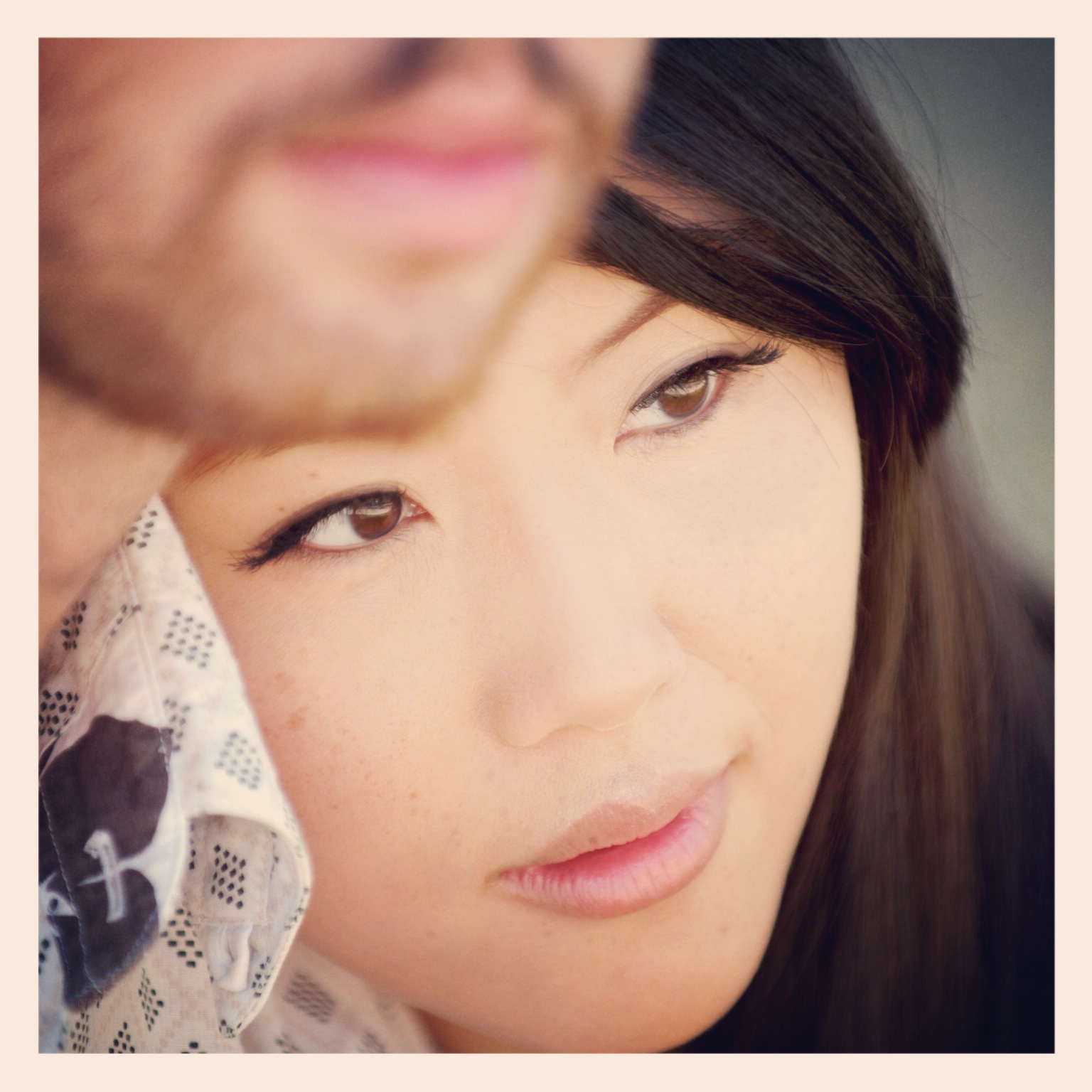
Photo credit: Original by Taylor Jackson Photography; Edited by nokxayasane/Instagram

I Love You More Than All the Windows in New York City
Jessica Greenbaum

The day turned into the city
and the city turned into the mind
and the moving trucks trumbled along
like loud worries speaking over
the bicycle’s idea
which wove between
the more armored vehicles of expression
and over planks left by the construction workers
on a holiday morning when no work was being done
because no matter the day, we tend towards
remaking parts of it—what we said
or did, or how we looked—
and the buildings were like faces
lining the banks of a parade
obstructing and highlighting each other
defining height and width for each other
offsetting grace and function
like Audrey Hepburn from
Jesse Owens, and the hearty pigeons collaborate
with wrought iron fences
and become recurring choruses of memory
reassembling around benches
we sat in once, while seagulls wheel
like immigrating thoughts, and never-leaving
chickadees hop bared hedges and low trees
like commas and semicolons, landing
where needed, separating
subjects from adjectives, stringing along
the long ideas, showing how the cage
has no door, and the lights changed
so the tide of sound ebbed and returned
like our own breath
and when I knew everything
was going to look the same as the mind
I stopped at a lively corner
where the signs themselves were like
perpendicular dialects in conversation and
I put both my feet on the ground
took the bag from the basket
so pleased it had not been crushed
by the mightiness of all else
that goes on and gave you the sentence inside.

Read more about this poem and poet on the Poetry Foundation website: http://bit.ly/T5U2sC.

Tell me about despair, yours, and I will tell you mine

the world offers itself to your imagination (Photo credit: @nokyoungxayasane / Instagram)

the world offers itself to your imagination (Photo credit: @nokxayasane/Instagram)

Wild Geese, Mary Oliver

You do not have to be good.
You do not have to walk on your knees
for a hundred miles through the desert repenting.
You only have to let the soft animal of your body
love what it loves.

Tell me about despair, yours, and I will tell you mine.
Meanwhile the world goes on.
Meanwhile the sun and the clear pebbles of the rain
are moving across the landscapes,
over the prairies and the deep trees,
the mountains and the rivers.
Meanwhile the wild geese, high in the clean blue air,
are heading home again.

Whoever you are, no matter how lonely,
the world offers itself to your imagination,
calls to you like the wild geese, harsh and exciting —
over and over announcing your place
in the family of things.

letter to a lost friend

Letter to a Lost Friend, Barbara Hamby

There must be a Russian word to describe what has happened
              between us, like ostyt, which can be used
for a cup of  tea that is too hot, but after you walk to the next room,
              and return, it is too cool; or perekhotet,
which is to want something so much over months
              and even years that when you get it, you have lost
the desire. Pushkin said, when he saw his portrait by Kiprensky,
              “It is like looking into a mirror, but one that flatters me.”
What is the word for someone who looks into her friend’s face
              and sees once smooth skin gone like a train that has left
the station in Petersburg with its wide avenues and nights
              at the Stray Dog Cafe, sex with the wrong men,
who looked so right by candlelight, when everyone was young
              and smoked hand-rolled cigarettes, painted or wrote
all night but nothing good, drank too much vodka, and woke
              in the painful daylight with skin like fresh cream, books
everywhere, Lorca on Gogol, Tolstoy under Madame de Sévigné,
              so that now, on a train in the taiga of  Siberia,
I see what she sees — all my books alphabetized and on shelves,
              feet misshapen, hands ribbed with raised veins,
neck crumpled like last week’s newspaper, while her friends
              are young, their skin pimply and eyes bright as puppies’,
and who can blame her, for how lucky we are to be loved
              for even a moment, though I can’t help but feel like Pushkin,
a rough ball of  lead lodged in his gut, looking at his books
              and saying, “Goodbye, my dear friends,” as those volumes
close and turn back into oblong blocks, dust clouding
              the gold leaf that once shimmered on their spines.


Read more about this poem and poet on the Poetry Foundation website: http://bit.ly/149Pv0R.

it is fitting and delicious to lose everything
– Donald Hall

you call out to me from your hiding place

Lao New Year, the water ceremony

Lao New Year, the water ceremony

So Father’s Day is tomorrow. It made me think of a poem I wrote for my dad when I was 22 years old.

Seven years ago!* Crazy.

Last weekend, I celebrated my 29th birthday. Birthdays make me feel pretty nostalgic. Well, if I’m being truthful, anything makes me nostalgic: the melody of a song, the way the air smells after the rain, or any number of overwrought poetic imagery that I won’t bore you with, but birthdays really do it for me. It’s a time to reflect and look back on what’s happened and to try to move on.

Now that I’m a year older and with Father’s Day around the corner, it made me think about my dad. My dad and I have had a perplexing relationship. I remember a time when I thought he knew everything. I remember feeling like he was my protector. I remember feeling safe with him.

But then things changed.

Our relationship began to unravel after me, my mom, and dad immigrated to Canada. It’s only in looking back that I realize the turmoil he was going through. He was a highly educated young man from Laos, but in Canada he was no one. He couldn’t speak the language. He felt like an outsider. He felt like less than a person.

Sadly, he took his frustrations out on the ones he loved: my mom and me. Although I don’t condone what happened between me and him and my mom, I’ve tried over the years to understand why our family life was filled with verbal and physical abuse.

I know my dad has made great strides to change himself. He’s now a pastor at the church I grew up in when we arrived in Canada. I’m really proud of him and every time he stands at the podium to speak, I can’t help but remember the man who had once been my protector and who had made me feel safe all those years ago.

Heal, Nokyoung Xayasane

when I was younger I clung to you
the roots of a tree gripping the riverbank
shifting waters could not move us
enveloped by mosquito netting and protected
while balmy breezes blew within a decrepit shanty
the cracks would not let in the pain

shards of light reflecting mirror side up
bruised forearm, broken finger
I cannot find you in your dark
hidden by your rage, I search for you

the splashing, laughing pool
flipping through the pages of a torn photo album
you call out to me from your hiding place
a quiet voice beneath the fists
loving pain, gentle brutality
comforting violence

sometimes, glimpses of you emerge
falling rain, glimmering laughter
and I hope for your light

my image in your eyes
my movements in your stance
quiet rage
shifting below
whispering madness seeps into light
mosquito netting, broken finger
morning grass, afternoon tag
and I remember you
as you were, as you are now

soft folds of a blanket
and the radio hums within the hut
hammock swaying
cradled in the softness, protected in the netting

soothing cooling
ointment glides on the burn
healing tissue replacing cut
a soft scar in the shadow of forgiveness
and I can see your light

(2009)

*Update: I just realized I wrote this poem when I was 25 years old and not 22 years old. I wrote a similar poem about my dad at 22, which had a less hopeful tone to it. The one above was written during a Creative Writing course while I was in University.

I glimpse through bewildered eyes

My mom’s birthday was two days ago. We went out for her birthday lunch on Saturday and my sister mentioned she had found my old autobiography that I had written in grade 7, I think.

She told me there were two sections that caught her eye. One section was about my ideal sister and one was about my ideal mother.

mom_birthday_collage

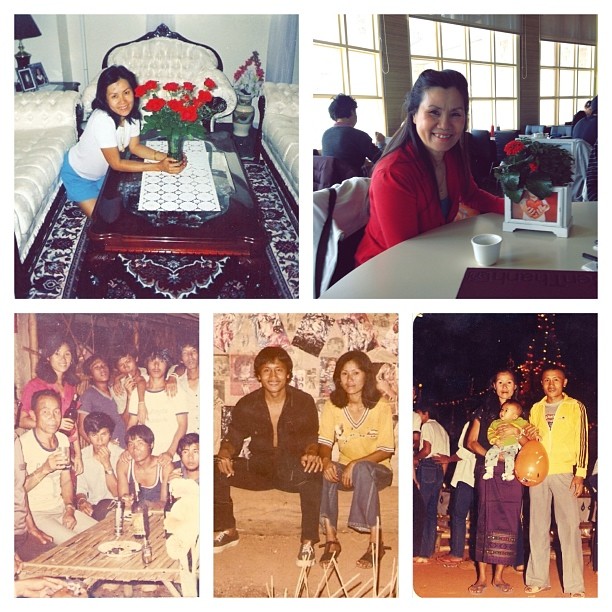
Homage to my hero (Photo credit: nokxayasane/Instagram)

I don’t remember much about what I wrote, but I do remember writing that my mom is my real-life hero. It always puzzled me when kids would say their heroes were movie stars or athletes. How do you know if they’re even good people, I had thought.

When I came across Jeannette Armstrong’s “Threads of Old Memory,” I couldn’t help but think about my mom and my family. It reminded me of the battles we had with each other, the struggles we all faced in coping with a new country, and the aftermath of my family’s arrival in Canada.

My father, my mother, and I had arrived in Cambridge, Ontario, from a refugee camp in Nakhon Phanom, Thailand, (where I was born). This was our chance at a better life, but it was a rocky road, to say the least.

We faced many hardships, but in the end, I knew my parents loved me. Their love and sacrifice is something I will always cherish.

Threads of Old Memory, Jeannette Armstrong

Speaking to newcomers in their language is dangerous
for when I speak
history is a dreamer
empowering thought
from which I awaken the imaginings of the past
bringing the sweep and surge of meaning
coming from a place
rooted in the memory of loss
experienced in ceremonies
wrenched from the minds of a people
whose language spoke only harmony
through a language
meant to overpower
to overtake
in skillfully crafted words
moving towards surrender
leaving in its swirling wake
only those songs
hidden
cherished
protected
the secret singing of which
I glimpse through bewildered eyes
an old lost world
of astounding beauty

When I speak
I attempt to bring together
with my hands
gossamer thin threads of memory
thoughts from the underpinnings of understanding
words seeped in age
slim
barely visible strands of harmony
stretching across the chaos brought into the world
through words
shaped as sounds in air
meaning made physical
changers of the world
carriers into the place of things
from a place of magic
the underside of knowing
the origination place
a pure place
silent
wordless
from where thoughts I choose
silently transform into words
I speak and
powerfully become actions
becomes memory in someone
I become different memories to different people
different stories in the retelling of my place
I am the dreamer
the choice maker
the word speaker
I speak in a language of words
formed of the actions of the past
words that become the sharing
the collective knowing
the links that become a people
the dreaming that becomes a history
the calling forth of memory
I am the weaver of memory thread
twining past to future
I am the artist
the storyteller
the singer
from the known and familiar
pushing out into darkness
dreaming splinters together
the coming to knowing

When I speak
I sing a song called up through ages
of carefully crafted rhythm
of a purpose close to the wordless
in a coming to this world
from the cold and hunger spaces in the heart
through the desolate and lost places of the mind
to this stark and windswept mountain top
I search for the sacred words
spoken serenely in the gaps between memory
the lost places of history
pieces mislaid
forgotten or stolen
muffled by violence
splintered by evil
when languages collide in mid air
when past and present explode in chaos
and the imaginings of the past
rip into the dreams of the future

When I speak
I choose the words gently
asking the whys
dangerous words
in the language of the newcomers
words releasing unspeakable grief
for all that is lost
dispelling lies in the retelling
I choose threads of truth
that in its telling cannot be hidden
and brings forward
old words that heal
moving to a place
where a new song begins
a new ceremony
through medicine eyes I glimpse a world
that cannot be stolen or lost
only shared
shaped by new words
joining precisely to form old patterns
a song of stars
glittering against an endless silence

we belong somewhere

If you had asked me where I wanted to be when I was in my mid-twenties, my answer would’ve been, “Anywhere but here.” It didn’t matter where as long as I was far away from everything I had ever known and anyone whom I had ever loved and still loved.

venice-beach

Venice Beach, Los Angeles (Photo credit: nokxayasane/Instagram)

I wanted to be totally lost and plunged into a different life: A life where I never had to see the people who hurt me, who loved me, who missed me, who disappointed me.

It seemed like the only way to be happy. But then I learned that I needed people just as much as they needed me. I learned that no matter where I went, I couldn’t run from myself nor from my people in my life. I learned eventually that I do belong somewhere, and I didn’t have to search very far to find that place.

Lonely for the Country, Bronwen Wallace

Sometimes these days
you think you are ready
to settle down.

This might be the season for it,
this summer of purple sunsets
when you stand in the streets
watching the sky, until its colour
is a bruised place
inside your chest.

When you think of settling down
you imagine yourself growing comfortable
with the land and remember the sustained faces
of men like your grandfather, the ridges of black veins
that furrowed the backs of their hands as they squared
a country boundary for you, or built once more
old Stu McKenzie’s barn exactly as they’d raised it
60 years ago.
You watch the hands of the women
on market days, piling onions, filling buckets
with tomatoes, their thick, workaday gestures
disclosing at times
what you think you recognize as caring,
even love.

At least that’s how it looks
from the outside and when you think
of settling down, you always think of it
as a place.

It makes the city seem imaginary, somehow.
As you drive through the streets,
you begin to see how the lives there look
as if they had been cut from magazines:
a blond couple carrying a wicker picnic-basket
through the park, a man in faded brown shorts
squatting on his front lawn
fixing a child’s red bike.

You wish you could tell yourself
that this is all too sentimental.
You want to agree with the person
who said, “There’s no salvation
in geography.”

But you can’t
and you’re beginning to suspect
that deep within you,
like a latent gene, is this belief
that we belong somewhere.

What you know
is that once you admit that
it opens in you
a deeper need.
A need like that loneliness
which makes us return again and again
to the places we shared
with those we can no longer love,
empty-hearted, yet expectant,
searching for revelations
in the blank faces of remembered houses.

As wide as bereavement
and dangerous,
it renders us innocent
as mourners at a graveside
who want to believe their loss
has made this holy ground
and wait
for the earth beneath their feet
to console them.

Wallace, Bronwen. “Lonely for the Country.” Common Magic. Canada: Oberon Press, 1985.

as if you imagined me here with you

I think we all have images of how our lives will turn out. Usually, reality and fantasy are two disparate images. I didn’t find this out until much later, but it’s difficult to know what you think you want, what you actually want, and what’s really good for you. I find it’s all about timing. Who I am and what I want changes with the experiences I’ve taken in. This sounds like common sense. But it’s not until you look back on the events that have transpired and the people you once knew, do you see them for what and who they really are.

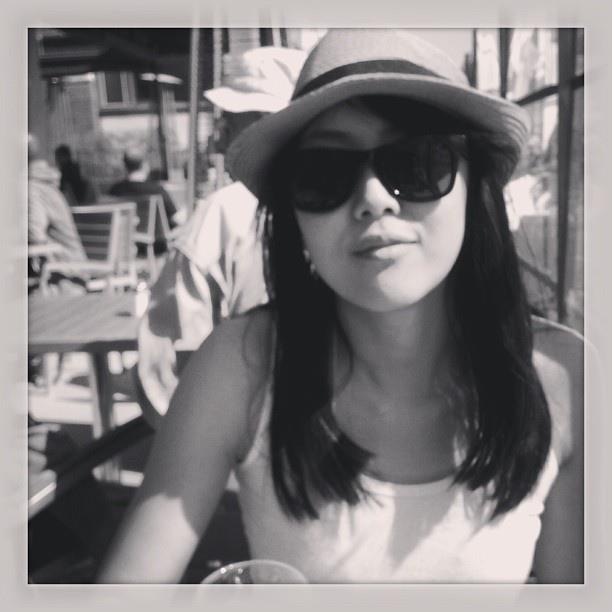
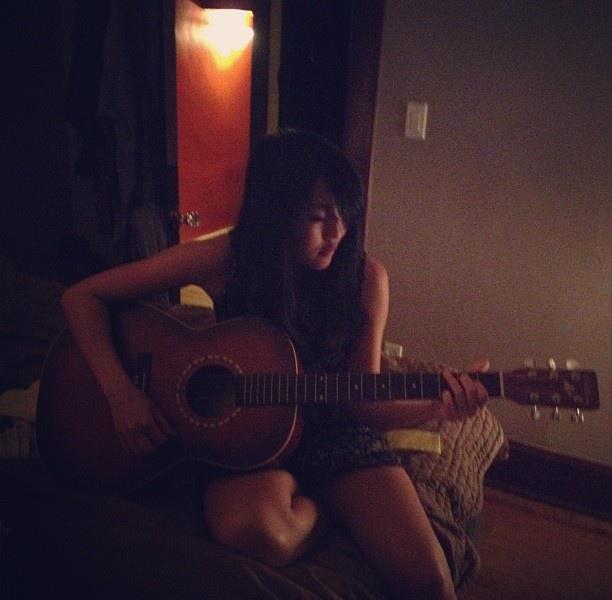
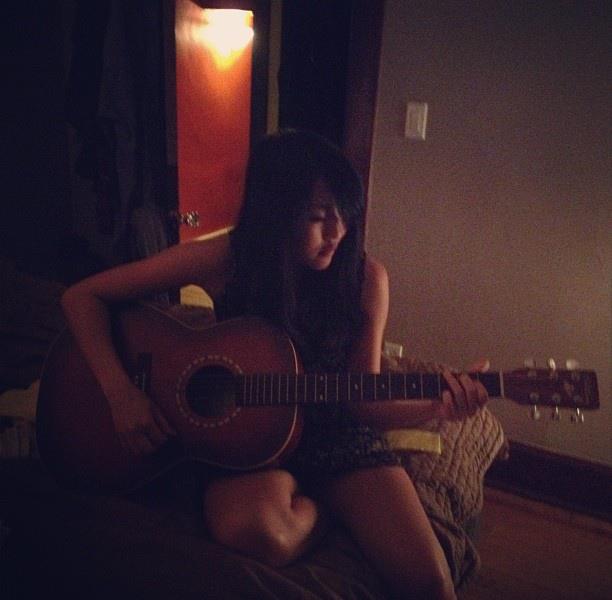
Me and my guitar, Louisa May.

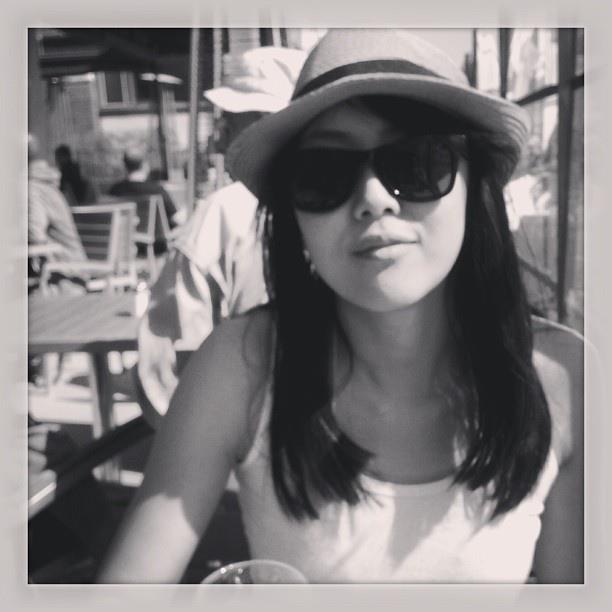
Me and my guitar, Louisa May.

I also realized I was frenetic in my desire to take in as much as possible — so I wouldn’t miss anything —  but I had to learn to breathe, and whatever I needed would come to me when I needed it. Instead of holding on to the anxiety of missing out on something (if I didn’t immediately record it somehow), I learned to let in the experience as if I was slipping into a warm bath rather than being jarred by a cold shower.

I’m still learning this lesson every day.

As If, J. Allyn Rosser

How do you explain why elephants
appear to move their unwieldy hulks
with greater dignity than most humans do
in their finest moments,
as if they had evolved beyond wanting
anything but what they have?
Why does the field begin to ripple
before the wind arrives in whispers,
as if there were a communication,
as if the landscape were poorly dubbed,
and we weren’t expected to notice?
What butterfly does not dart away from us
as if it could sense our latent cruelties,
and yet return to check and double-check?
Has the night not gotten recently darker,
as if to insinuate that we have squandered
the light that was there?
Have we made too much of our own?
And did you notice afterward the dawn
opening up with a tentative eagerness
as if there were something crucial to illumine,
as if we would wake up early just to see it?
I imagine you reading this now
with an expression of quiet trouble
itself troubled by currents of hope,
as if you imagined me here with you,
as if I might be able to see your expression,
and at least answer it with mine.

Read more about this poem and poet on the Poetry Foundation website: http://bit.ly/uidQIZ.